
BERKELEY, CA (October 20, 2026) – The numbers are striking: Global data center electricity consumption is expected to rise from 460 Terawatt-hours (TWh) in 2024 to over 1,000 TWh by 2030. Each GW of power demand from a data center requires approximately 30,000-50,000 tons of copper, meaning that the AI expansion alone will generate approximately 1 million metric tons of new annual copper demand by 2030. The UN estimates that meeting overall copper demand could require up to 80 new mines and $250B in investments by 2030.
Much of this extractive activity will take place in low- and middle-income countries (LMICs). While this flow of capital towards LMICs has the potential to enhance local economies and improve living standards, there is a well-established history of extractive industries impacting local welfare in a negative manner over time. It is critical for policy-makers, academics, and well-intentioned firms to understand how this new wave of foreign direct investment will impact local economies and community welfare.
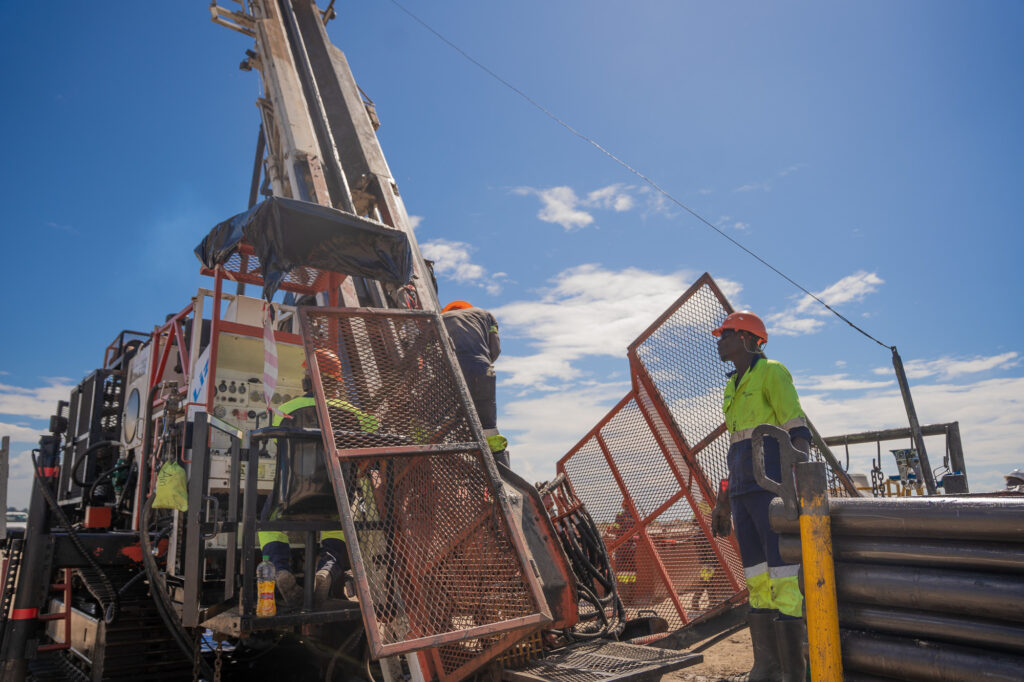
The Center for Effective Global Action (CEGA), with support from KoBold Metals, a Berkeley-based scientific mineral and exploration company, is excited to announce a study examining the local impacts of the Mingomba copper mine in Zambia. The Mingomba project is considered the world’s highest-grade undeveloped copper deposit and KoBold Metals has committed to $600M in direct investment in Zambia by the end of 2026.
In collaboration with researchers from Barnard College and the University of Zambia, CEGA affiliated faculty at the University of California, Berkeley, Edward Miguel and Jonathan Weigel, will identify a panel of thousands of households in the region to evaluate the new mine’s effects on local welfare and economic activity. This study is the first of its kind — no existing academic work has prospectively surveyed communities before mining activities, collected a panel survey with the same individuals, and used exploration data to identify synthetic control communities and thus estimate causal effects. Research is fully independent from KoBold, the methodology will be pre-registered prior to execution, and all findings, data, and code will be publicly available.
Results will be used by KoBold to maximize the benefits to communities as it discovers and develops mineral deposits worldwide.
In addition, the partnership will extend CEGA’s flagship fellowship program to Zambia, building local research capacity. Two PhD students from Zambian universities have joined the study team as CEGA Fellows where they will receive training, mentorship, and access to CEGA’s academic network while contributing to the project.
The Center for Effective Global Action (CEGA) is a hub for research, training and innovation headquartered at the University of California, Berkeley. CEGA generates insights that leaders can use to improve policies, programs, and people’s lives. Its academic network includes nearly 200 faculty, over 100 scholars from low- and middle-income countries, and hundreds of graduate students — from diverse academic disciplines across the globe — that produce rigorous evidence about what works to expand education, health, and economic opportunities for people living in poverty.
KoBold Metals
KoBold Metals is the leading scientific mineral exploration and development company focused on discovering and developing the critical minerals needed for the future economy. Founded in 2018 and headquartered in Berkeley, California, KoBold combines world-class expertise in exploration geoscience with artificial intelligence, advanced scientific computing, and purpose-built technologies to make mineral discovery more rigorous, efficient, and repeatable.
KoBold conducts exploration and development programmes across major mineral regions around the world through wholly owned projects, joint ventures, and strategic partnerships. Its technology and scientific methods guide decisions across the exploration process from where to acquire land and what data to collect, to sampling, airborne surveying, and drilling. In Zambia, KoBold is advancing the Mingomba copper project in partnership with ZCCM-IH, applying the same scientific rigour that underpins its exploration programmes to mine development.
KoBold invests in communities by hiring and promoting local talent; supporting local suppliers; sharing the most advanced technologies; raising scientific, environmental, and labor standards; and donating time and money to advance local priorities in healthcare, education, and livelihoods for everyone.